
What is Kento?
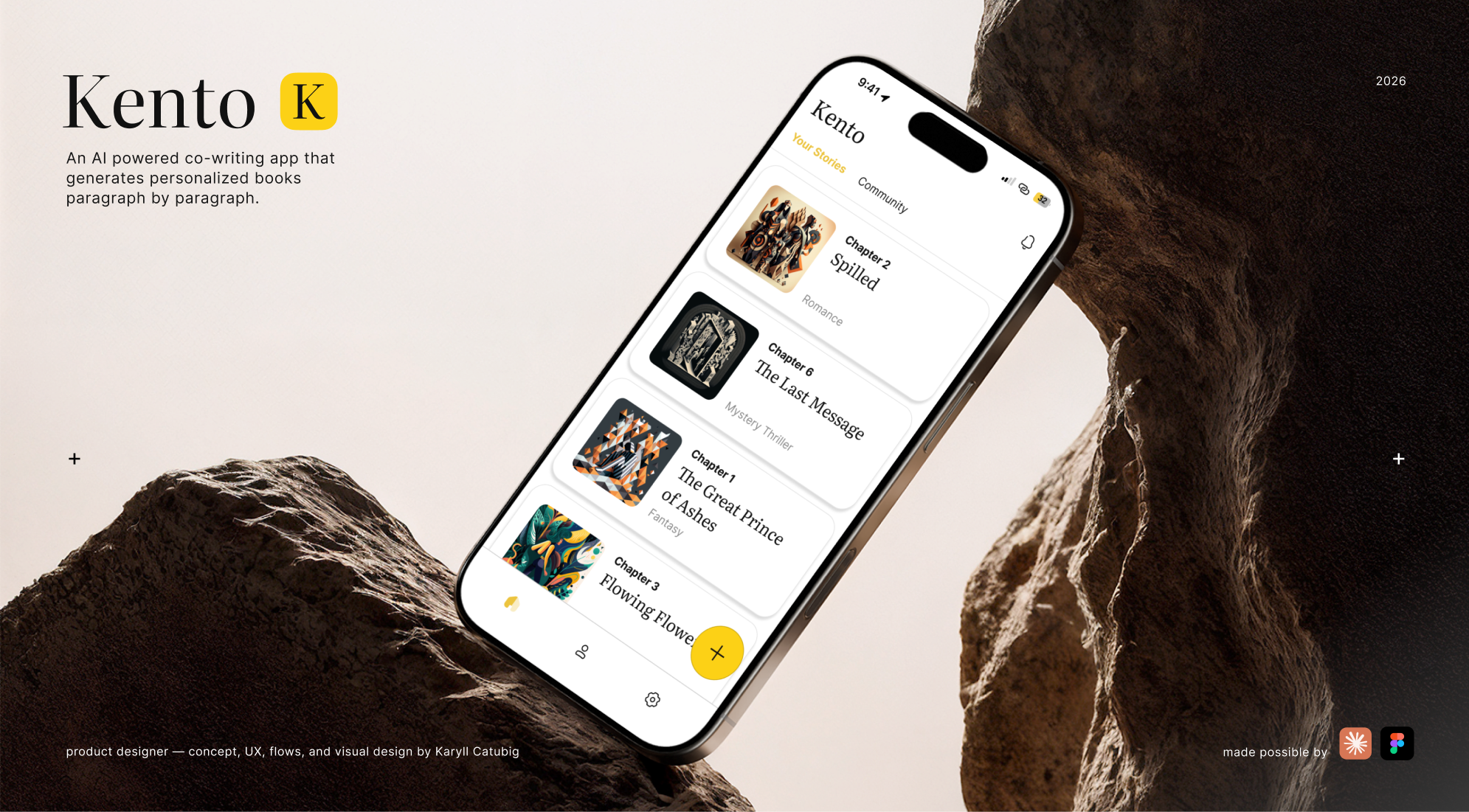
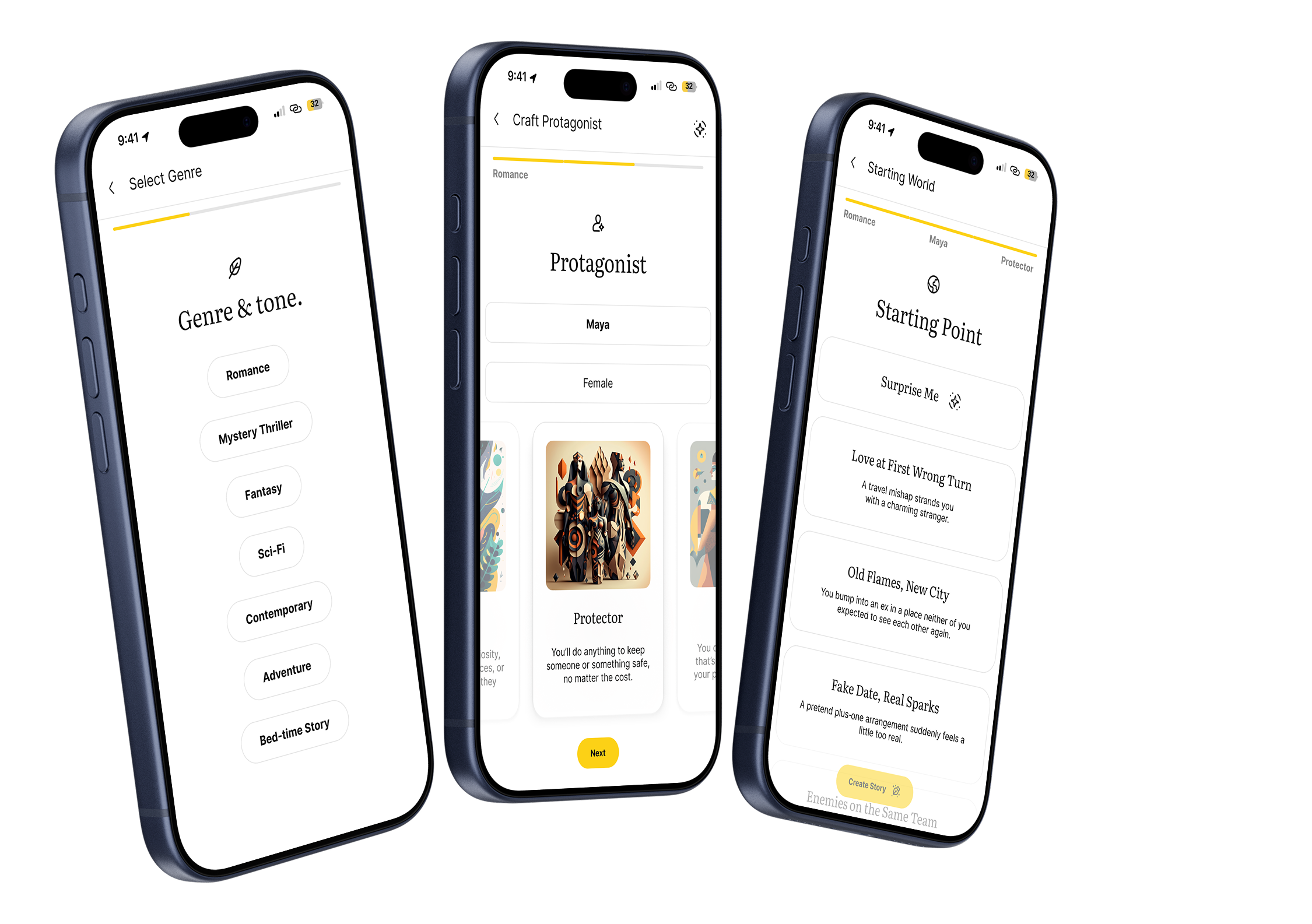
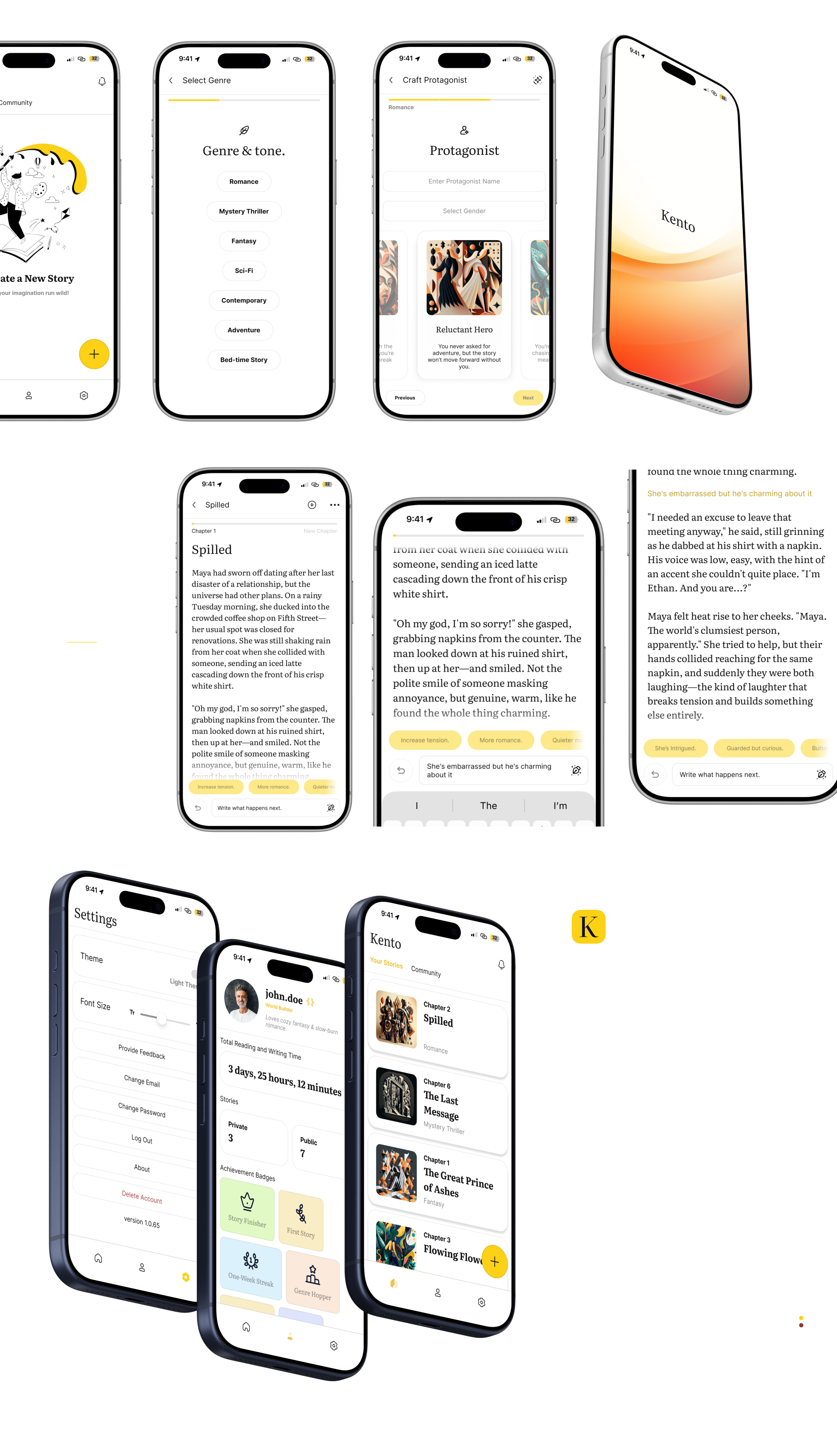
Kento is an AI powered co-writing app that writes personalized books with you, one paragraph at a time. Simply set your genre, tone, and mood, then guide the story forward with short nudges while Kento crafts the prose. Whether you're exploring fantasy worlds, unraveling a mystery thriller, or shaping a memoir, Kento turns your imagination into a book that's entirely your own.
The Problem
People with rich story ideas and creative energy struggle to turn them into finished narratives. Existing tools are either too rigid (Scrivener, Notion), too generic (ChatGPT prompts), or too niche (Everweave's DnD-only focus). Readers who want a personalized, immersive story experience have nowhere to go.
The Opportunity
The intersection of AI-generated content and interactive storytelling is growing rapidly, yet no product has claimed the "personalized book for general audiences" space. Kento enters this gap with a reader-first framing, not a writing tool, not a game, but a living book that grows with the reader's choices.
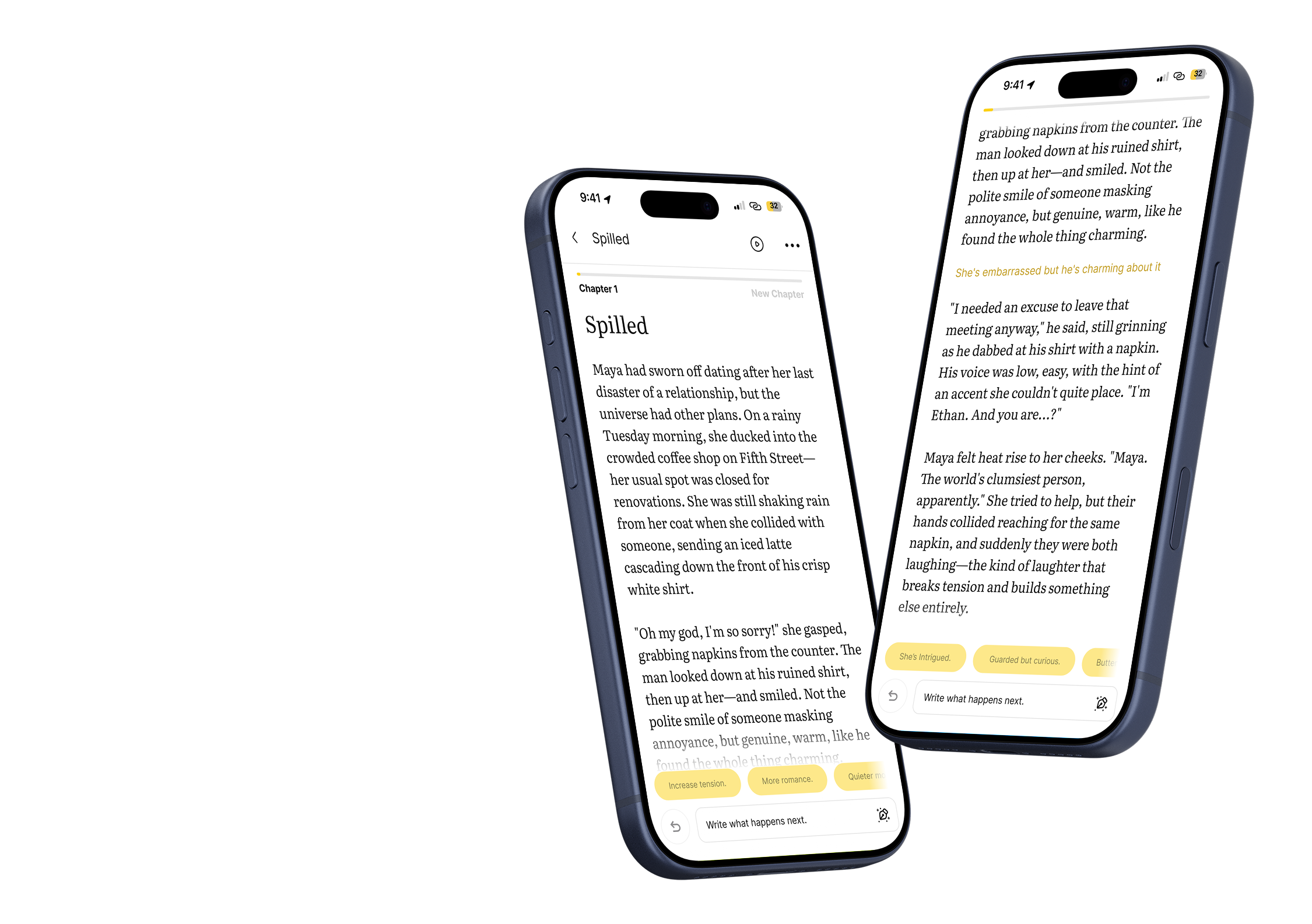
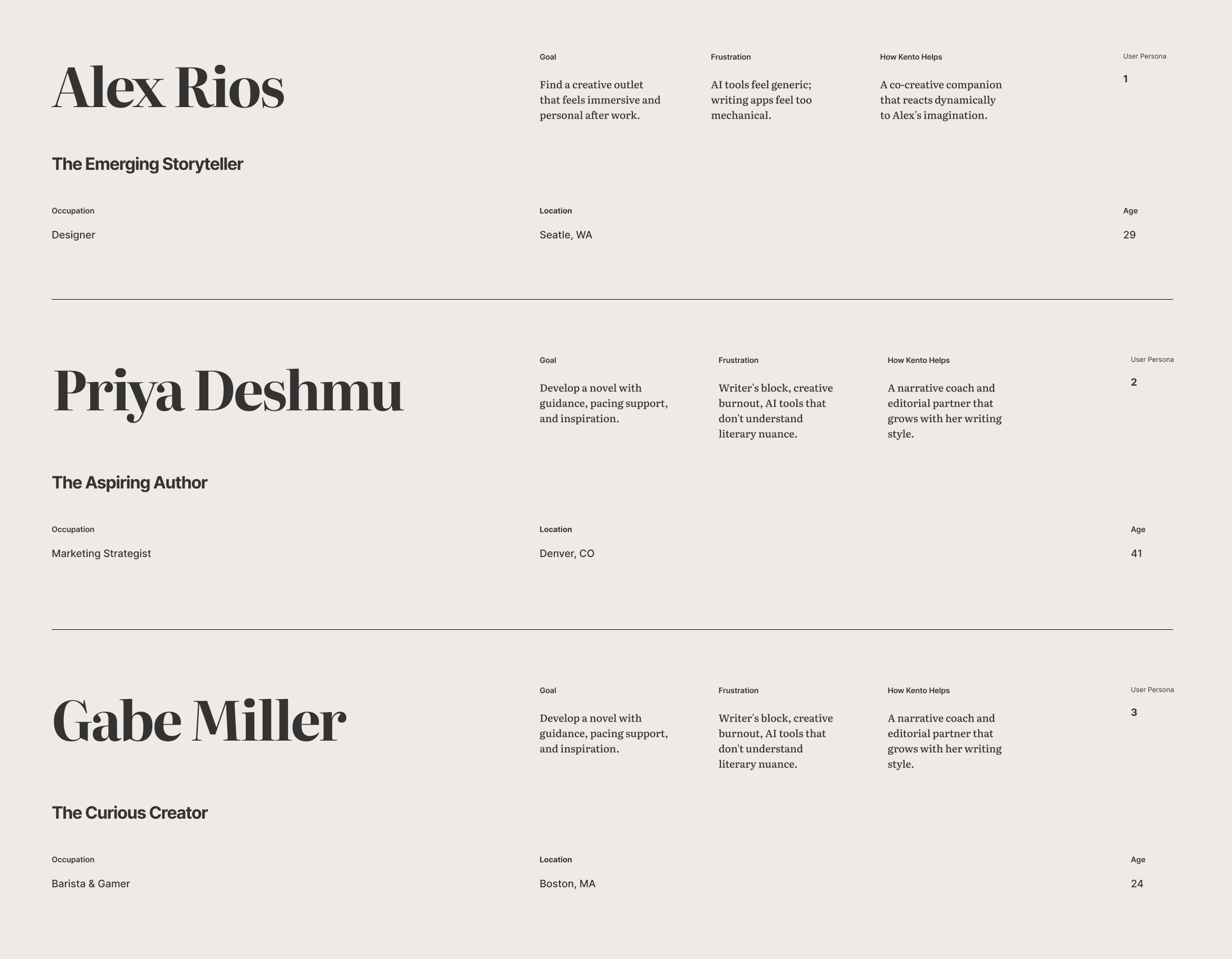
User Personas & Target Audience
Jobs-To-Be-Done
Overcoming the blank page
"When I sit down wanting to read something made for me, I want the app to spin up a premise from a few preferences, so I can dive in without planning anything."
Guiding without fully writing
"When I have ideas about what should happen next but don't want to draft full prose, I want to nudge the story with short instructions so the app does the heavy lifting."
Experiencing a personal book
"When I'm tired of static books and generic AI outputs, I want a single evolving story that remembers my preferences and feels like a long-form book made for me."
Filling short downtime meaningfully
"When I have 10–20 minutes, I want to continue my story from where I left off so those moments feel creative rather than wasted."
Practicing storytelling with low pressure
"When I want to improve at storytelling, I want to experiment with tone and plot decisions one paragraph at a time without starting from scratch."
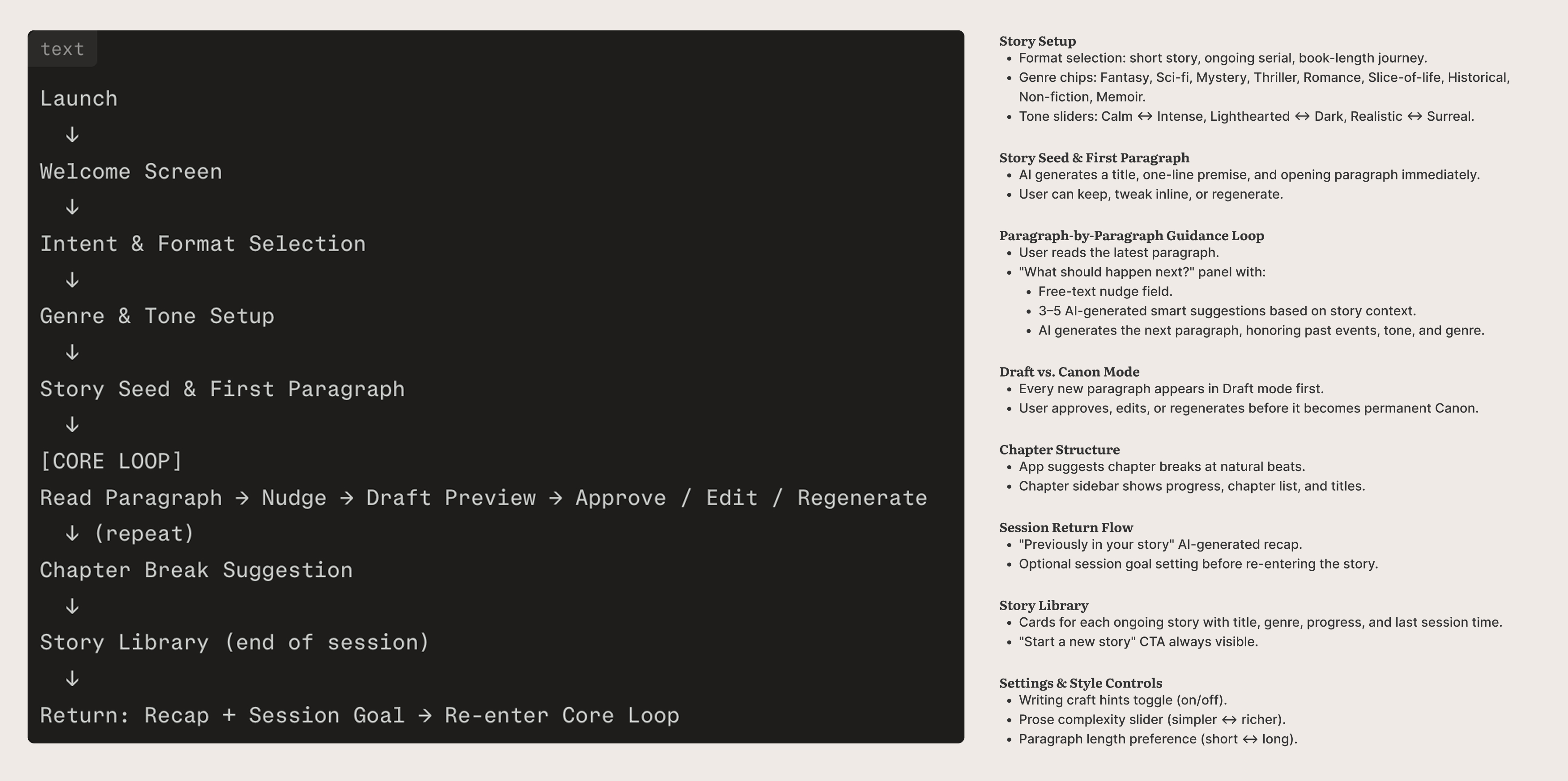
Core Features & MVP
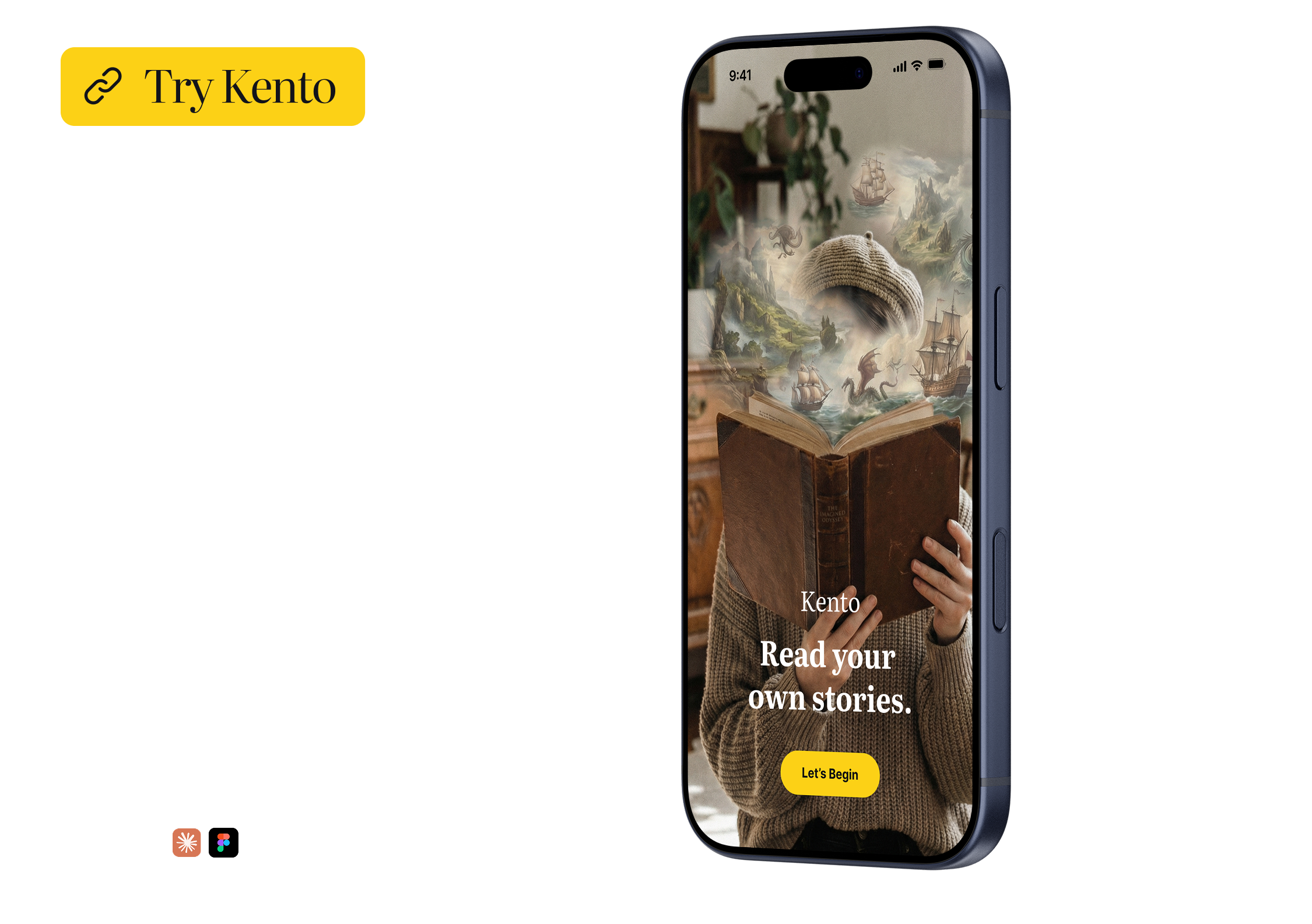
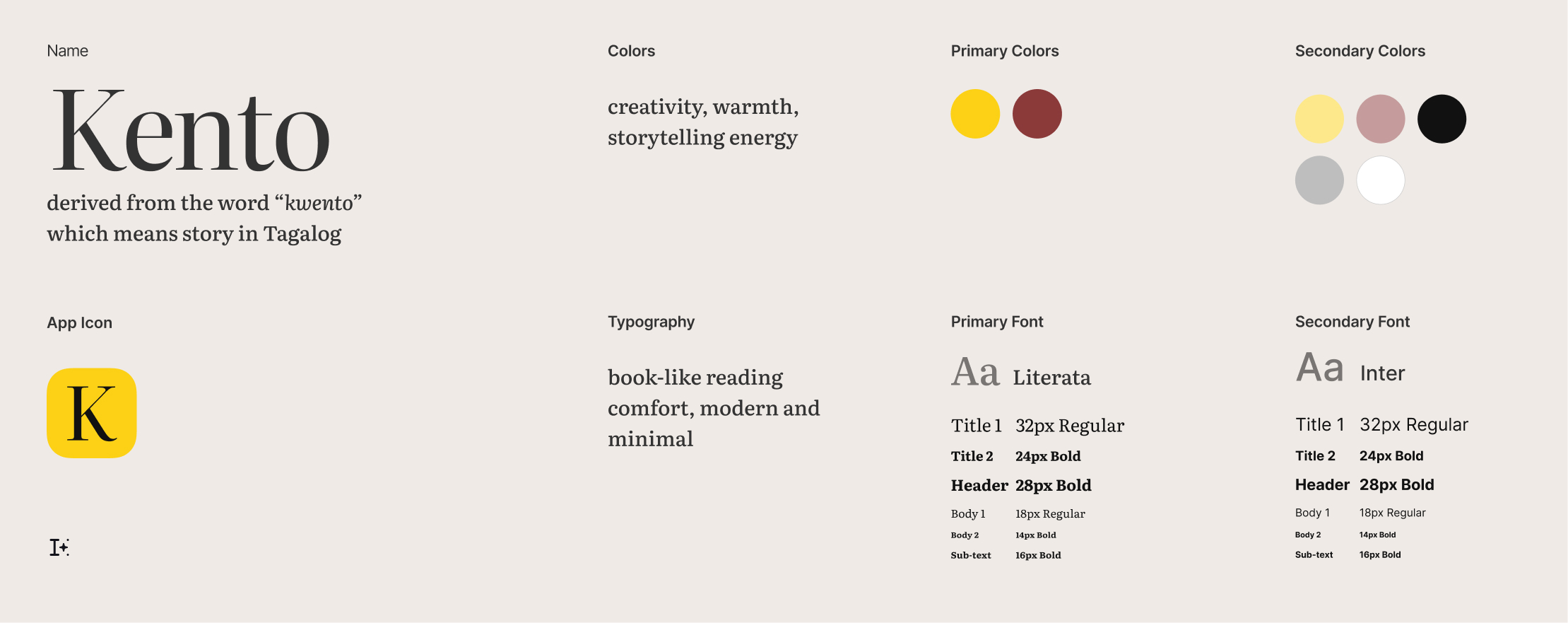
Aesthetic and Visual Direction
Sleek, modern, typographic — inspired by Notion, Arc, Apple, and editorial book design.
Assumptions & Key Risks
Top assumptions to validate
Users enjoy a conversational, paragraph-by-paragraph guidance loop more than one-click generation.
The "reader-first" framing resonates more broadly than a "writer tool" framing.
Users will return across multiple sessions to build long-form stories.
Romance-driven readers are a strong early adopter segment.
Top risks to mitigate
AI outputs feel repetitive or lose continuity in longer stories (context management critical).
Users feel the AI is "taking over" their story (mitigated by Draft vs Canon mode).
Free AI tools (ChatGPT) feel "good enough," making subscription justification hard.
Addressable market may be narrower than expected if DnD/fantasy readers are the primary early adopters.